NABU.de Tiere & Pflanzen Vögel Forschung Stromtod
Bird Protection on Powerlines
| This webpage has been published with the support of the UNEP/CMS Secretariat |
|
NABU and his BirdLife partners fight against risks of electrocution on powerlines
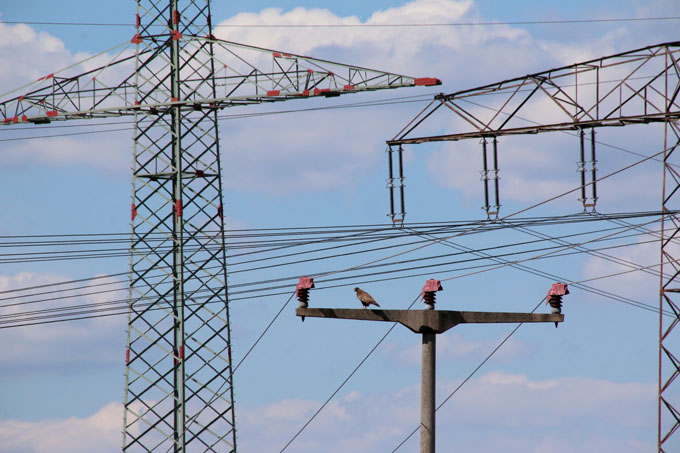
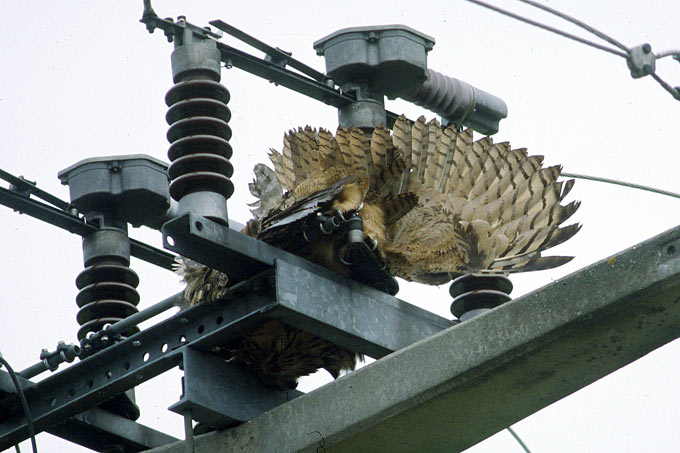
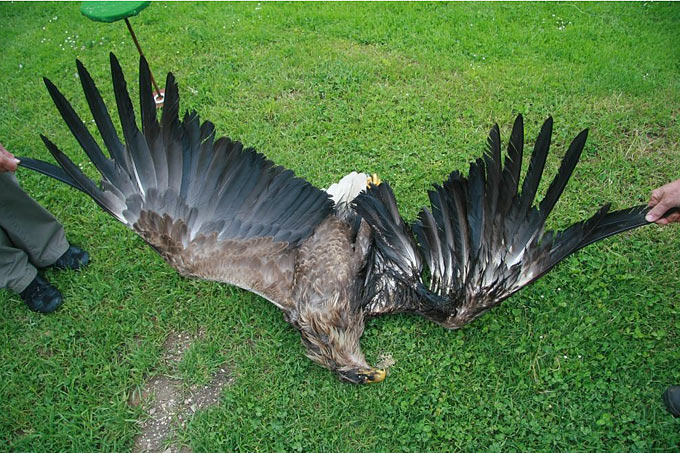
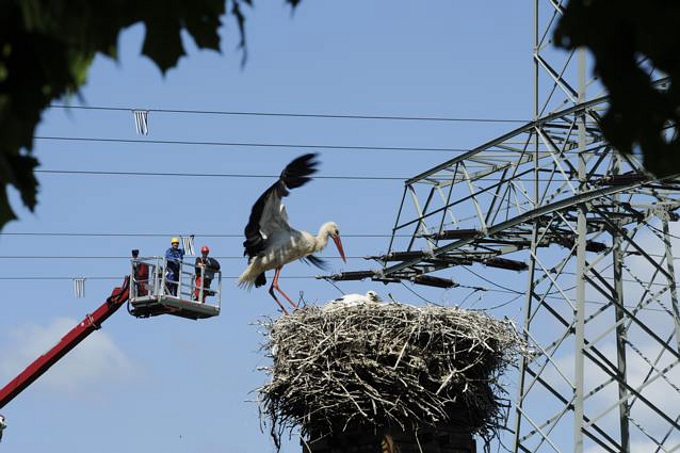
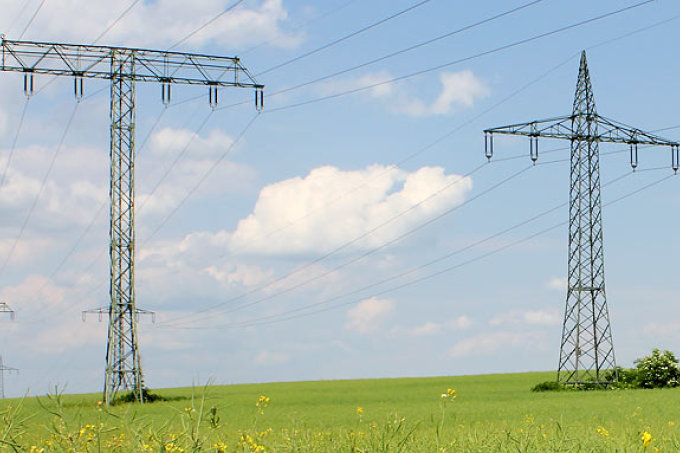
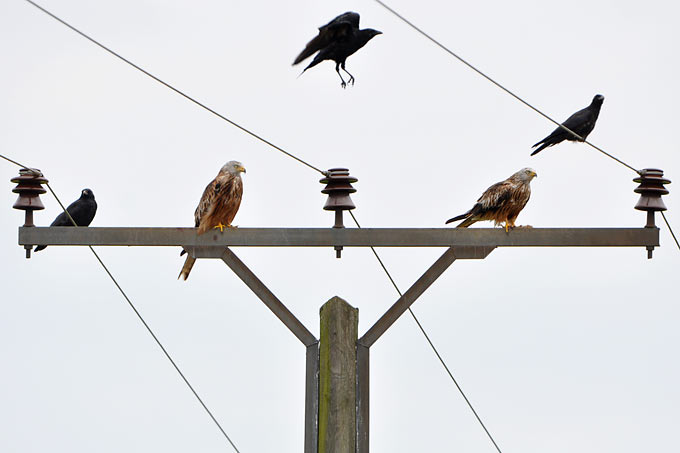
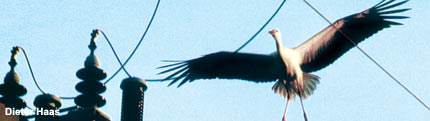
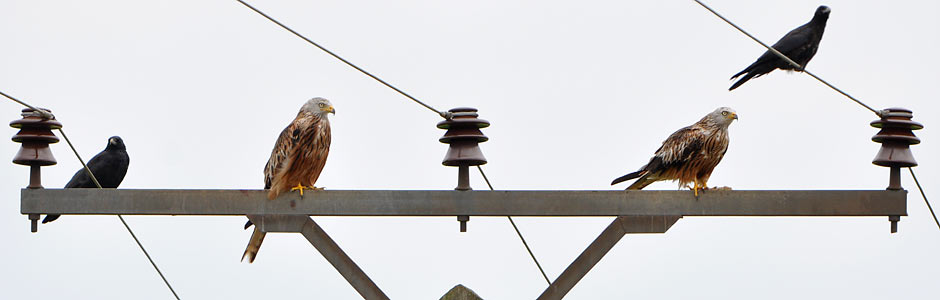
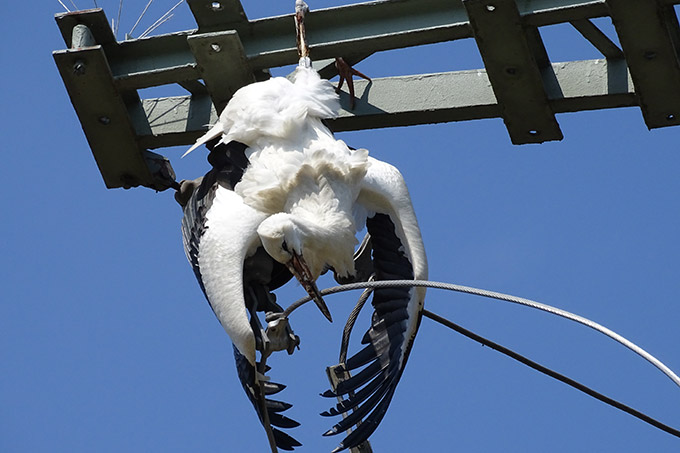
For more than just a few bird species, electrocution on powerlines is one of the main causes for severe losses in population. Especially bigger species such as our "flagship species", the White and Black Stork, Eagle Owls, Lesser Spotted Eagle or Griffon Vultures fall victim to dangerous powerlines. In some regions this situation is becoming more and more disquieting - although technical solutions do already exist.
Only a few states implement bird protection on powerlines in their legislation. One of these positive examples is the new Nature Conservation Law in Germany (Bundesnaturschutzgesetz), implemented in April 2002. It now requires new power poles to be constructed in a way that is harmless for birds. Electricity companies must retrofit dangerous types of poles within 10 years. As a result, all power poles of high risk have to be defused by 2012. In some regions of Germany this is close to being achievedthanks to the good cooperation of energy providers, but elsewhere progress is slow.
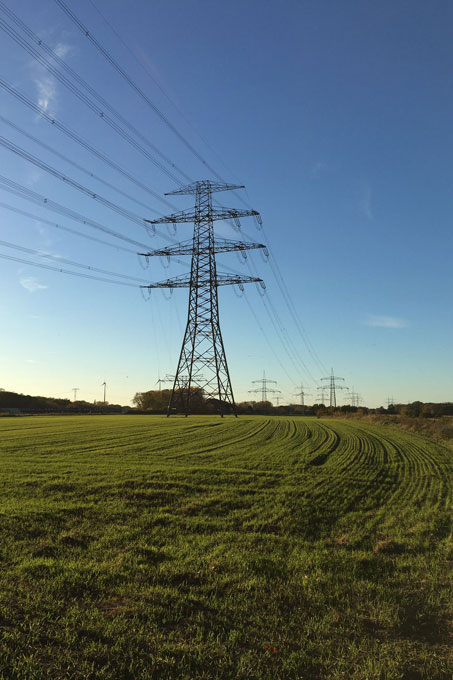
Worldwide the potential risk is increasing through the wiring" of the landscape that is encroachingeven into the most remote parts of the inhabited continents. Meanwhile, efforts towards effective protection - especially for migratory species - are few and far between, because of inconsistent implementation and the lack of international cooperation between countries.
For NABU and its BirdLife partners, the main target is to work on an international basis against bird electrocution on powerlines or poles. In this context NABU has elaborated new technical standards necessary for construction as well as for mitigation within the medium voltage range to prevent the death of birds by electrocution. These technical guidelines with detailed bird-safe practices on power poles have been published with the support of the Federal Ministry for the Environment, Nature Conservation and Nuclear Safety in a NABU-brochure and can be obtained in several languages.
Conference of the Parties adopts resolution on electrocution of migratory birds
One of the first international successes was the seventh meeting of the Conference of the Parties of the Convention on the Conservation of Migratory Species (CMS) in September 2002 in Bonn. Together with the German Ministry of the Environment, and supported by BirdLife International, NABU submitted a draft resolution on electrocution of migratory birds which was adopted with overwhelming support.
The basis of this success was the work done by the NABU working group and its head, Dieter Haas who investigated the risk potential of electrocution in Central and eastern Europe. As a result guidelines covering construction as well as mitigation measures for the medium voltage range were elaborated and presented to the conference participants. These guidelines have been published in the NABU brochure "Vorsicht Stromschlag" and were adopted in resolution No. 7.4 "Electrocution of Migratory Birds". The main focus of the resolution are medium-voltage (10 - 60kV) electricity transmission lines. It calls on all Parties and Non-Parties
- to include appropriate measures in legislation and other provisions for planning consent for medium-voltage and associated towers to secure safe construction and thus minimise electrocution impacts on birds.
- to incorporate appropriate measures aimed at protecting birds against electrocution.
- to neutralize existing towers to ensure that birds are unable to sit on parts that are dangerously close to live transmission components.
- to cooperate with ornithologists, conservation organisations and competent authorities in order to reduce the electrocution risk posed to birds from transmission lines
In future it will be of the greatest importance, that as many countries as possible follow these guidelines and implement the measurements.
Bern Convention implements NABU-recommendations for bird protection on powerlines
Because of the hard work of our working group, detailed guidelines for protection of birds on medium voltage towers and powerlines were implemented for the first time in December 2004 in European conservation policy. Supported by BirdLife International, Dieter Haas, Bernd Schürenberg und Markus Nipkow presented guidelines to retrofit dangerous types of poles to the Standing Committee of the Bern Convention (Convention on the Conservation of European Wildlife and Natural Habitats), which should be implemented by all signatory parties. Moreover, any new facility has to be constructed in a bird-safe way. Apart from medium voltage poles, these guidelines also cover high voltage transmission lines and railway constructions. On the official homepage of the Bern Convention you can read and download the guidelines and our publication Protecting birds from powerlines (D. Haas, M. Nipkow, G. Fiedler, R. Schneider, W. Haas & B. Schürenberg 2005).
Further Links
Official Site of our working group Electrocution
Our guidelines for this topic, also available in portuguese and spanish:
Vorsicht Stromschlag! - Empfehlungen zum Vogelschutz an Energiefreileitungen (PDF, 665 KB)
Recomendações para a protecção de aves em zonas de linhas eléctricas aéreas (PDF, 765 KB)
Sugerencias para proteger la avifauna en los tendidos eléctricos aéreos (PDF, 760 KB)
Caution: Electrocution! - Suggested Practices for Bird Protection on Power Lines (PDF, 824 KB)
Caution: Electrocution! - Suggested Practices for Bird Protection on Power Lines - Russian Version (Download as .pdf, 345 KB)

NABU Regional
Service
E-Cards
Podcasts
Ab sofort gibt es den NABU zum Hören. Vogelstimmen, Musik und Interviews machen den Podcast zu einem wahren Vergnügen fürs Ohr.
NABU-Newsletter
Verbandsnetz
Ansprechpartner
Lars Lachmann
NABU-Vogelschutzexperte
Lars.Lachmann@NABU.de
Sie können helfen
Unterstützen Sie den NABU beim Vogelschutz! Mehr
Vogelstimmen-Quiz
Lernen Sie die Stimmen der 40 häufigsten Gartenvögel kennen. Mehr
Storchenreise
Verfolgen Sie die Reise der NABU-Senderstörche. Mehr
Online-Vogelführer
Mit wenigen Klicks 250 heimische Arten einfach online bestimmen. Mehr
Rote Liste der Vögel
Jede zweite einheimische Vogelart ist gefährdet. Mehr
Eisvogelspiel
Schaffen Sie es, Kevin Kingfisher sicher nach Hause zu fliegen? Mehr
Natur fürs Handy
Vogelgezwitscher und Wolfsgeheul - nature rings bietet Tierstimmen als Klingeltöne. Mehr
Vogel des Jahres
Die Bekassine ist Botschafterin für Moore und Feuchtwiesen. Mehr
Vogelfreund werden
„Vogelfreunde“ bei Facebook: Für alles, was Federn hat Mehr
Spiel fürs iPhone
Spielen und dabei den NABU unterstützen! Mehr
Erste Hilfe für Tiere
Hier finden Sie Pflege- und Auffangstationen deutschlandweit. Mehr