


NABU.de English Version Issues International
International
International Project Office
Our work combines environmental and social concepts and ranges from species conservation, habitat protection, the establishment of protected areas, ecotourism and environmental educa-tion right through to capacity building, nature conservation as a means of crisis prevention, fighting poverty and the strengthening of civil society.
Mehr
The International Organisational Structure of NABU
The International Voluntary Specialist Group (BFA) is made up of five NABU Working Groups (BAGs) for Eurasia, Africa, International Species Conservation, the Caucasus and Migration Unlimited and offers an interesting and varied platform for voluntary members to be involved in NABU’s international focus regions.
Mehr
Ethiopia
Conservation of Wild Coffee Forests in Ethiopia
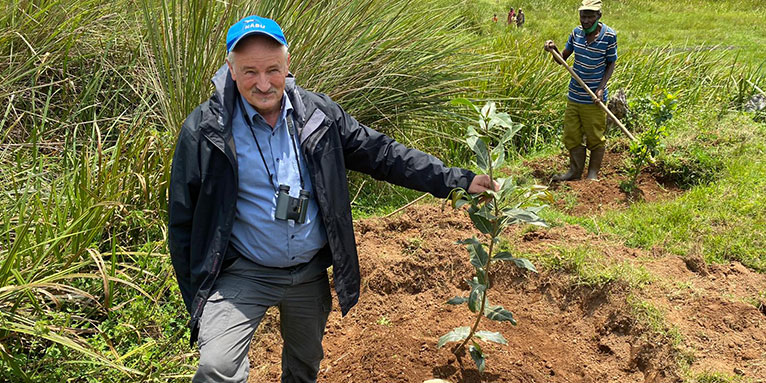
The remaining 2,000 square kilometres of afromontane cloud forest in the for-mer kingdom of Kafa in the south-west of Ethiopia provide not only storage for vital groundwater reserves for the region, they are also home to a wide variety of species and make up one of the most important genetic reserves of the world. Wild-growing Coffea arabica can be found here, which is a genetic re-source of value beyond measure.
Mehr
Armenia
Diverse Work
NABU has been advising and supporting the Ministry of Nature Protection of the Republic of Armenia since 2001. In the first few years of our partnership we put the implementation of international nature conservation conventions at a high priority, but in 2006 we were able to expand our partnership to include joint projects as well. In March 2007, NABU and the Ministry signed a cooperation agreement to protect Armenia’s biodiversity.
Mehr
Azerbaijan
NABU in Azerbaijan
Conserving biodiversity is a challenge that demands commitment from both government institutions and society as a whole. Not everyone is aware of the consequences of using natural resources unsustainably, but the effects of environmental destruction affect many people both directly and indirectly. That’s why it is essential to raise public awareness and to show local communities good alternatives to using their natural resources.
Mehr
Kenya
Sustainable Development for Nature Conservation
Kenya is famous for its fascinating nature and extensive national parks that draw in visitors from all around the world every year. Increasing population and growing poverty compounds the local communities’ dependency on natural resources and leads to conflicts and overexploitation of the forest. NABU is supporting the long-term conservation of nature with innovative ideas in co-operation with local partners.
Mehr
Kyrgyzstan
Nature Conservation in the Tien Shan Mountains
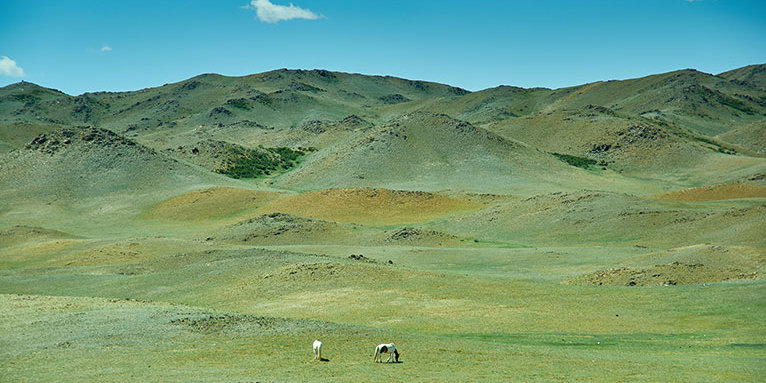
Since the beginning of the 1990s, our work in Kyrgyzstan, in the fragile high mountainous region of Central Asia, has centred on protecting endangered species, establishing protected areas, environmental education and supporting non-governmental organisations.
Mehr
Sahara
Collaboration for species conservation in the Sahara
NABU has been supporting the international non-governmental organisation, the Sahara Conservation Fund (SCF) with its work to protect endangered animal species in the Sahara Desert since 2007.
Mehr
Tajikistan
Nature conservation transcending borders in the high mountains of Pamir-Alai
National and international experts systematically compiled information about the plants and animals of the fragile high mountain region and in doing so, also recorded endangered species like the snow leopard, the Himalayan brown bear, the Marco-Polo sheep and many rare bird species – NABU has been working for many years to ensure the survival of species such as these.
Mehr
Cotton made in Africa
A Partnership Project supported by NABU
Cotton made in Africa is a project that helps African small-scale farmers and their families to improve their standard of living and in doing so, reducing the harmful im-pact that cotton cultivation has on the environment.
Mehr
International Species Conservation
All around the world natural habitats are being destroyed and degraded by deforestation, the expansion of agriculture, human settlements and environmental pollution. Human activity has caused the plants and animals that are an integral part of these ecosystems to be put under pressure and to disappear from their natural habitats, many of them even becoming extinct; scientists have estimated that every year around 26,000 species are lost forever.
Mehr
Establishing and Strengthening Protected Areas
The establishment of protected areas is one of the most important tools in nature conservation. Every ecosystem has a delicate balance of elements that can be easily upset through human intervention. Protected areas are often a refuge for rare and endangered plant and animal species and prevent unique areas of countryside from being developed or overexploited.
Mehr
Fighting Poverty
poverty reduction and nature conservation
Around the world just around 1.1 billion people are living in extreme poverty. Two thirds of the world’s poor live in rural areas in developing countries and the majority of them are heavily dependant on their local natural resources to survive. Firewood is needed to cook food everyday. The local population gather fruit, seeds, nuts and other non-wood products from the forests and other ecosystems. Poverty forces many farmers to destroy the forest and convert the land into farmland simply to survive.
Mehr

NABU Regional
Service
E-Cards
Podcasts
Ab sofort gibt es den NABU zum Hören. Vogelstimmen, Musik und Interviews machen den Podcast zu einem wahren Vergnügen fürs Ohr.
NABU-Newsletter
Verbandsnetz
Electrocution
How to make powerlines save for storks, owls, eagles and vultures Mehr
Marine Environment
Symposium results ''New Methods of Ammunition Removal in the North and Baltic Sea'' Mehr
NABU Home
Jump to the English mainpage... Mehr